
Each autumn before the current season begins, the NBA publishes the “Official NBA Guide,” a reference book about all records, statistics and information about the Association.
The book (or now PDF) is a monstrous 977 pages. And if you do a Ctrl+F (or use the little magnifying glass), type in “Wilt Chamberlain” and see that his name appears 473 times for numerous reasons: 10 All-NBA teams, seven consecutive scoring titles, four MVPs, three retired jerseys (Warriors, Sixers and Lakers) and one award (Rookie of the Year) that bears his name.
Chamberlain, who played his last NBA season in 1972-73 and died in 1999, still holds 79 regular-season and playoff records. Some of them you may be familiar with — 100 points in a single game, 50.4 points per game in 1961-62 and most rebounds in a game, 55. Others — most seasons leading the league in minutes (eight), most consecutive 40-point games (14) and lowest percentage, games disqualified, minimum 400 games (0 percent; he never fouled out of a game) — may not be as familiar.
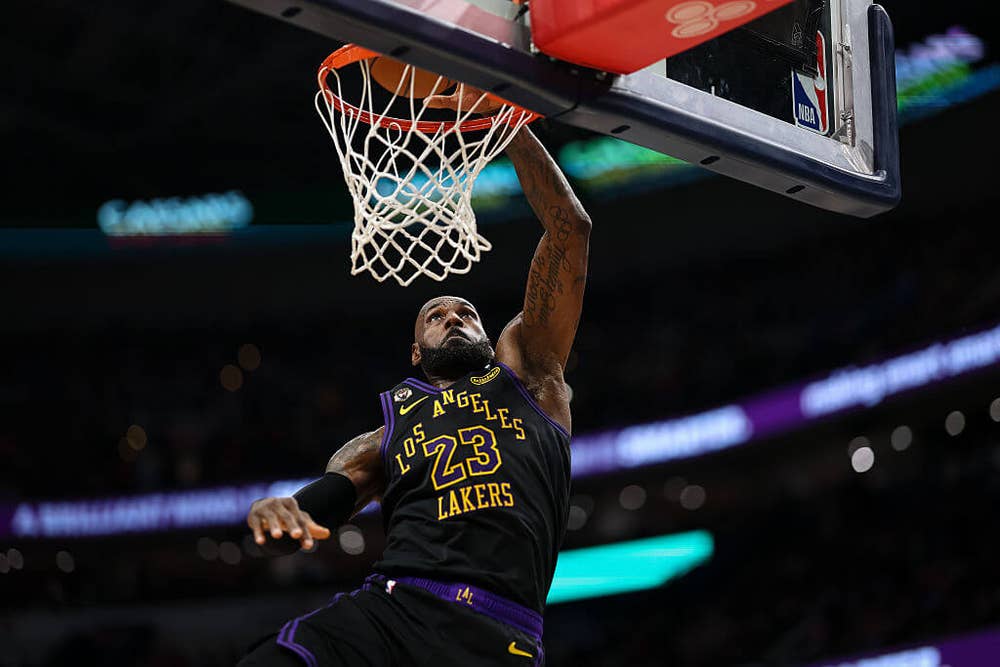
Yet, while the number of Wilt records may never be surpassed, another name appears a lot throughout the official guide: “LeBron James.”
When you search for that name, it appears 295 times. If Wilt is a colossus, what does that make LeBron? Once James officially retires, he will have provided countless stamps to the league’s record books, and they won’t be short on variety.
The youngest ever category? He owns that — just pick a milestone. Youngest ever with a 30-point game? Yep. Youngest player to pull off a 40-point triple-double? Of course. How about the youngest to achieve consecutive triple-doubles? Yep, yep.
Over James’ historic career, he’s aged well enough to become the oldest player to do several things, including recording a 30-point game, 30-point triple-double, 20-point, 20-rebound performance and 50-point double-double. His list of NBA records will be credibly longer than a CVS receipt, cementing his peak as the longest we’ve seen from any athlete in any sport ever.
Yes, Michael Jordan is one of the most dominant players in NBA annals and enjoyed possibly the best athletic peak in modern sports history, but 13 seasons will always be fewer than 23, which is to acknowledge the challenge of maintaining high-level feats for more than two decades.
Tom Brady indeed retired from the NFL as football’s all-time leader in Super Bowl wins, passing yards and touchdown tosses, but he attempted only three passes as a rookie and rode the pine until a Drew Bledsoe injury paved the way for opportunity.
If we do baseball comparisons, let’s input Cy Young, who retired with an MLB-record 749 complete games as a pitcher after the 1911 season. In the 115 years since then, no other pitcher has put together more than 405 such outings (Grover Alexander), and there’s very little chance of that record being broken.
Sports records are meant to be astonishing, whether they’re set by all-time greats or obscure names only a Google search could find. As time passes, once new marks are set, there can be an occasional debate over who could someday overtake it, let alone put their stamp on seemingly countless pages of new records.
At age 41, James’ per-game averages don’t resemble those that made him seem as if he were basketball’s ultimate created player until Victor Wembanyama came along, but his numbers remain plenty formidable for a player who stopped having much to prove in the last few seasons. That’s been the one special element of James’ career: how much he’s simply loved basketball for about his entire life. It’s only right for him to be basketball’s latest example of longevity.