
In June 2021, two U.S. lawmakers sent a letter to Chris Paul, president of the NBA Players Association, highlighting recent reporting on the league’s entanglements with forced labor in Xinjiang.
“More than a dozen NBA players had endorsement deals with Anta, Li-Ning, and Peak prior to the publishing of these articles, and players have continued to sign new deals with Anta Sports,” Senator Jeff Merkley and Representative James McGovern wrote in the letter, referring to three of China’s leading sports apparel brands. “We believe that commercial relationships with companies that source cotton in Xinjiang create reputational risks for NBA players and the NBA itself.”
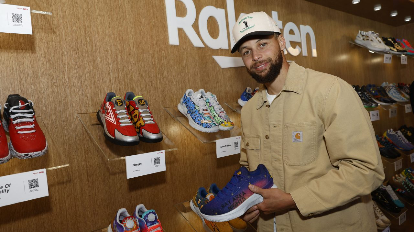
Last week, Golden State Warriors star Stephen Curry signed a 10-year, $400 million endorsement contract with Li-Ning, according to reporting from ESPN.
The announcement marked the end of drawn-out negotiations which began last November when Curry split with his longtime sponsor Under Armour. Li-Ning already boasts partnerships with Curry’s Warriors teammate Jimmy Butler and Hall of Famer Dwayne Wade.
“Steph Curry is one of the most talented and watched basketball players in the world, which is exactly why this matters,” Representative Chris Smith, who succeeded McGovern as co-chair of the Congressional-Executive Commission on China, said in a statement last week. “The NBA, its players, and sites like Amazon cannot suggest that they stand for social justice at home while cashing checks from companies tied to the Chinese Communist Party’s forced-labor economy.”
Laura Murphy, a professor of human rights at Sheffield Hallam University, said that Curry’s Li-Ning deal could hurt the Uyghur cause. “Curry’s ‘partnership of a lifetime’ is precisely the kind of behavior that gives companies — and Beijing — a sense that no one cares what happens to the Uyghur people,” Murphy said.
Congress banned imports from Xinjiang in 2021 following years of extensive reporting that documented China’s system of mass detention and forced labor in the region. In 2022, U.S. officials banned the import of Li-Ning merchandise, citing the role of North Korean forced labor in its supply chain.
“Anta, Li-Ning and 361 Degrees are among the brands that directly own production sites linked to these human rights abuses,” an investigation jointly published by The New York Times, Der Spiegel and the Bureau of Investigative Journalism in May 2025 found.
Li-Ning’s Curry coup comes as Chinese apparel brands cope with flagging domestic demand. “They still can survive,” said Aaron Wang (王新凱), a Taiwanese entrepreneur who has extensive experience in the Chinese footwear industry. “But they were losing huge business.”
Wang added that for brands like Anta and Li-Ning, the only option left was to shift their focus overseas in search of new consumers. He was skeptical, however, that Curry, who is coming to the end of his career, will turn out to be the right investment. “It’s not the right timing,” he said. “Maybe five years earlier [would have been better].”
The NBA has long been active in social justice causes in the United States. But in China, where some estimates put the value of its business at $5 billion, the league walks a tightrope. In 2019, after Houston Rockets General Manager Daryl Morey tweeted in support of pro-democracy protests in Hong Kong, the Chinese government stopped broadcasting NBA games for three years.
“He and Steve Kerr talk a big game politically, but always seem to appease China,” former NBA player and human rights activist Enes Kanter Freedom wrote in a post on X, referring to Curry and his longtime Warriors coach. “The NBA loves activism until China is involved.”