
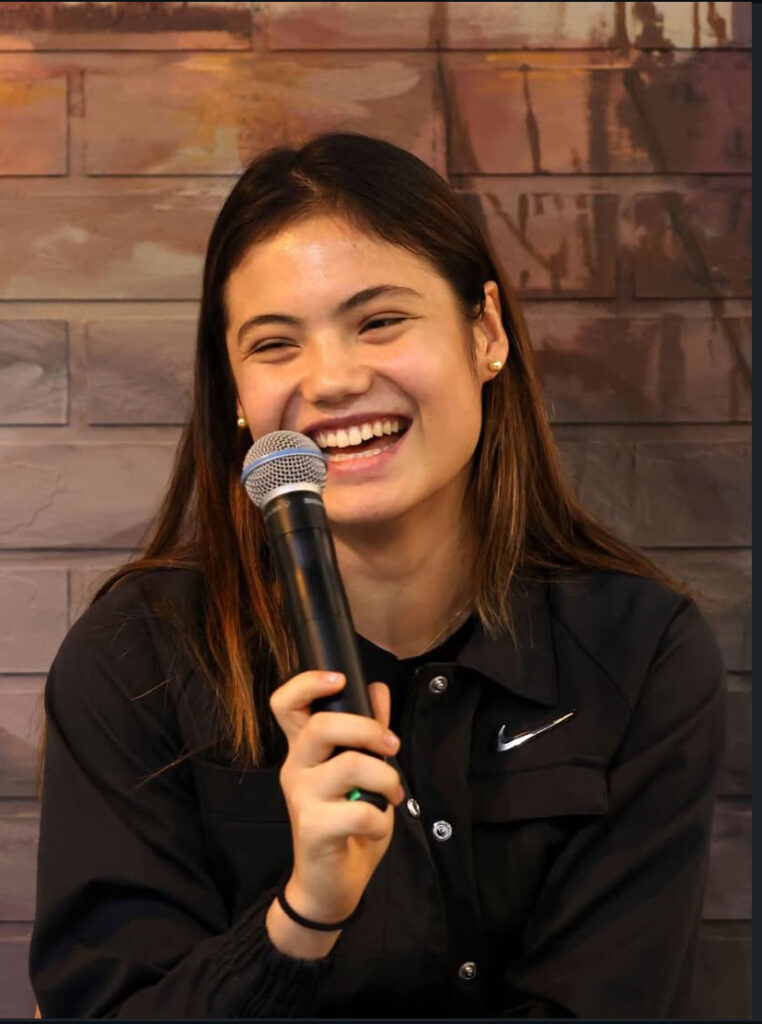
Emma Raducanu was ranked 150th in the world and had played exactly one Grand Slam main draw in her life. Then she walked into the 2021 US Open as a qualifier and proceeded to do something that had never been done before in the Open Era: win the whole thing without dropping a set. Ten matches. Zero sets lost. It was one of the most extraordinary tennis performances of the 21st century.
Four and a half years later, Emma Raducanu has not won another title. Not a WTA 250. Not a WTA 125. Nothing. And this week at Indian Wells, she gave an interview to BBC Sport that finally made plain what many in tennis have suspected for some time. Emma Raducanu, for all her staggering talent, is simply not serious about becoming the player she could be.
Her words, not a paraphrase: she does not want a coach who will come in, tell her how to play, and expect her to listen. She wants to return to her “natural way of playing,” because that approach has apparently been “coached out of her.” She is heading into her tenth coaching arrangement in five years, this time an informal, no-commitment setup with former commentator Mark Petchey. Petchey himself has acknowledged that he cannot be a full-time presence due to his media commitments.
Let that sit for a moment. A 23-year-old Grand Slam champion, with every resource in the world at her disposal, has just publicly announced that she does not really want to be coached.
The Carousel
The coaching carousel has been the defining story of Raducanu’s post-US Open career, and at this point, it is impossible to write it off as bad luck or circumstance. She has cycled through Andrew Richardson (fired immediately after winning the US Open), Torben Beltz, Dmitry Tursunov, Sebastian Sachs, Nick Cavaday, Vladimir Platenik (a brief two weeks), Francisco Roig, and now back to Petchey on an informal basis. Tursunov, a sharp and experienced coach, walked away from her during a trial period and publicly flagged concerns about working with her. Platenik lasted only one match and said she was “feeling stressed.” Roig, who had coached Rafael Nadal to 16 of his 22 Grand Slams, could not make it to six months.
The most telling departure may still be the one that received the least attention. When Platenik left, he framed it in sympathetic terms, saying he understood the pressure she was under. Yet the subtext was unmistakable: even after one match, something was not right. That is not a coaching problem. That is a player problem.
Patrick Mouratoglou, who coached Serena Williams to ten of her Grand Slam titles, has been blunt about Raducanu’s instability. He has said that the constant churn in her team is one of the worst things she could be doing to her development, and that her injuries and results are a direct consequence. Kim Clijsters, a four-time Grand Slam champion, admitted on a podcast that she was genuinely confused by the constant changes, and raised a question nobody wants to answer directly: who is actually making these decisions?
Now Raducanu has given us the answer herself. Her criterion for a good coaching relationship, laid out in her own words, is essentially this: someone who will accept her or agree with her.
“I would rather someone not come in and tell me ‘let’s do this’, and I disagree with it, but have to listen to them.”
This is a remarkable thing for a professional athlete to say. Every great champion in tennis has, at some point, had to surrender instinct to a coach’s vision and trust the process. Novak Djokovic went to Boris Becker. Serena went to Mouratoglou. Andre Agassi famously rebuilt his entire game under Brad Gilbert despite initial resistance. The entire premise of elite coaching is that an experienced outside observer can see things you cannot see from inside the baseline, and that sometimes you have to do what they say, even when it feels wrong.
Raducanu has now had nine coaches tell her things she did not want to hear. Her response, each time, has effectively been to move on and find someone more agreeable. In that sense, the BBC interview is not so much a revelation but rather a confession.